Using Genetic Algorithms to Find Technical Trading Rules
Franklin Allen, Risto Karjalainen | Journal of Financial Economics 51 (1999)
download paper here
Genetic Programming Review
Conclusions
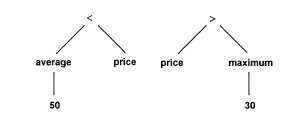
- Solution candidates are represented as hierarchical compositions of functions (not bit strings).
- Successors of each node provide the arguments for the function identified with the node.
- The terminal nodes correspond to the input data.
- The entire tree is evaluated, recursively from the root node, as a function.
- To find out whether optimal rules composed by GA's can be used to forecast future stock returns.
- Logical combinations of simple rules that look at moving averages and maxima and minima of past prices from 1929 - 1980.
- S&P 500 is the benchmark.
- Algorithm goal is to classify each trading day as being either:
- 'in' the market: earning the market rate of return.
- 'out' of the market: earning the risk-free rate of return (this is the one-month T-bill rate of return).
- Trading strategy:
- if ( ( the current state is 'in' ) && ( the trading rule signals 'sell' ) )
- switch to 'out'
- if ( ( the current state is 'out') && (the trading rule signals 'buy' ) )
- switch to 'in'
- else
- stick with current state
- Functions return either Real or Boolean values:
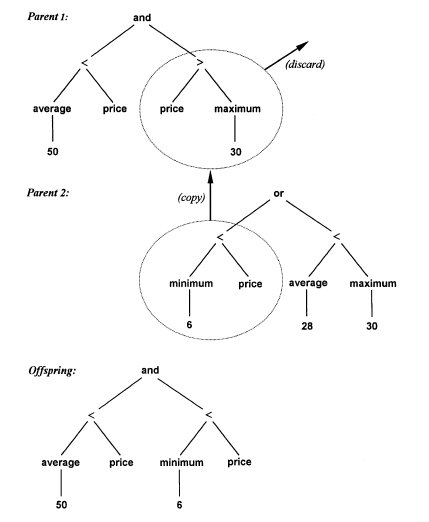
- Crossover is implemented by random selection of parent nodes:
The Fitness Function
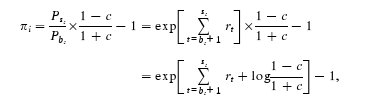
where...
Psi, Pbi = sell / buy price
c = one - way transaction cost expressed as % of price

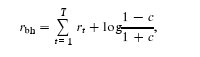
where...
T = number of trading days
Ib(t), Is(t) = buy / sell indicator variables
n = number of trades
The Algorithm
Results
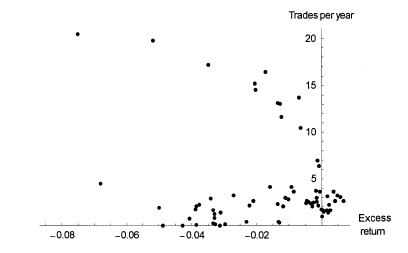
*transaction costs of 0.25%
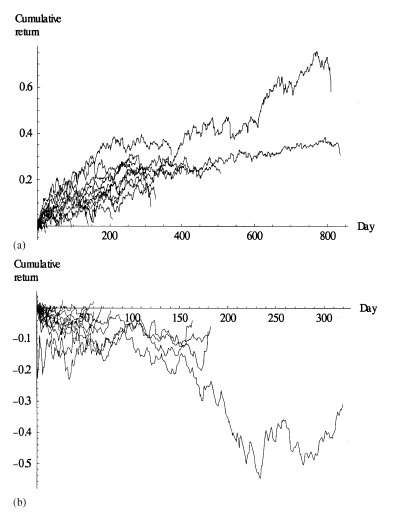
*transaction costs of 0.10%
- Fitness of a rule is computed as the excess return over the buy-and-hold strategy during a training period.
- Again, trading rules are applied to each trading day to divide the days into periods of 'in' (market return) or 'out' (risk-free return).
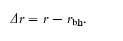
- Single trade return computed as:
where...
Psi, Pbi = sell / buy price
c = one - way transaction cost expressed as % of price
rt = log Pt - log Pt - 1
- Continuously compounded return for a trading rule is computed as:
where...
T = number of trading days
Ib(t), Is(t) = buy / sell indicator variables
n = number of trades
- Return for the buy-and-hold strategy is computed as:
- Finally, the fitness of the trading rule (excess return) is computed as:
- Step 1
- Create a random rule.
- Compute the fitness of the rule.
- Repeat 500 times (initial population).
- Step 2
- Apply the fittest rule in the population to the selection period and compute the excess return.
- Save this rule as the initial best.
- Step 3
- Pick two parent rules at random using fitness based selection (roulette wheel).
- Create a new rule through crossover.
- Compute the fitness of the rule.
- Replace one of the old rules by the new rule using an inverted fitness based selection.
- Repeat 500 times to produce next generation.
- Step 4
- Apply the fittest rule in the population to the selection period and compute the excess return.
- If the excess return improves upon the rule produced in Step 2, save as the new best rule.
- Stop if there's no improvement for 25 generations or after a total of 50 generations.
- Otherwise, go to Step 3.
Results
*transaction costs of 0.25%
*transaction costs of 0.10%
Conclusions
- Not possible to make money after transaction costs using technical trading rules.
- Are able to indentify periods to be in the market when returns are high and volatility is low, and out when the reverse is true.